Establishment
The Establishment: Liechtenstein’s solution for assets, shareholdings and bespoke beneficiary arrangements

An institution governed by private law is a legally and economically independent special-purpose trust, established as a legal person. It is a distinct Liechtenstein legal form with no direct equivalent in foreign legal systems and may pursue both economic and non-economic purposes.
The institution is suitable for flexible asset, shareholding and beneficiary structures with a clear legal separation

Asset management
The management of property, securities and other assets within an independent structure.

Holding shareholdings
Acquiring and holding shareholdings in companies both in Germany and abroad.

Beneficiary structure
The targeted structuring of benefits for the benefit of specific natural or legal persons.

Commercial purposes
Use for legally permissible commercial activities, including trading businesses.

Foundation-like structure
A structure similar to that of a foundation or, alternatively, with a more corporate-style structure.

Succession and Structuring
Long-term structuring of assets and rights with a flexible framework for governing bodies and beneficiaries.
Answers to the most important questions about the Liechtenstein institution
What is an institution, and what is its purpose?
An institution governed by private law is a legally and economically independent special-purpose fund established as a legal entity. Its purpose may be of an economic or non-economic nature and may be carried out in any form permitted by law, such as through the trading of goods, the acquisition of shareholdings, or the management of property and assets on behalf of specific beneficiaries. The institution’s assets alone are liable for its debts.
How is an institution established?
A natural or legal person is sufficient to establish the institution. The institution is established by means of a memorandum of association and articles of association, but only comes into legal existence upon entry in the Commercial Register. Public notarisation is not required for this. Companies that do not carry out any business activities in Liechtenstein do not require a licence under commercial law.
How much must the authorised or minimum capital be?
The statutory minimum capital is CHF/EUR/USD 30,000 if the capital is not divided into shares. If the capital is divided into shares, the minimum capital is CHF/EUR/USD 50,000. The company’s capital may be contributed in the form of cash contributions, contributions in kind or a combination of both. Contributions in kind must be valued as part of a pre-incorporation audit. Following registration, the capital is at the institution’s free disposal, and the institution’s assets may be increased at any time thereafter.
What documents are required to set up the company?
When applying for entry in the Commercial Register, the following documents in particular must be submitted:
- Memorandum of Association
- A certified copy of the Articles of Association, signed by all founders
- A declaration by the founders regarding the provision or securing of contributions to the initial capital
- Declarations of acceptance by the elected members of the Board of Directors, the auditors and, where applicable, the representative office
- Declaration of authorisation to sign on behalf of the company by the persons authorised to represent it, with certified signatures
The articles of association must contain the provisions required by law, in particular regarding the company’s purpose. If there is no provision regarding beneficiaries, the law presumes that the holder of the founders’ rights is the beneficiary.
What are the governing organs of an institution?
In the case of an institution with founder’s rights, the holder of the founder’s rights is the supreme governing body; where there are no founder’s rights, this role is held by the Board of Directors. The Board of Directors manages the institution’s affairs and represents it externally. An auditor must be appointed if the institution operates a business conducted in accordance with commercial principles or if its statutory purpose so permits; in other cases, this is optional. The representative acts on behalf of the institution in dealings with the Liechtenstein authorities and serves as the address for service. Other bodies, such as a supervisory board or a board of trustees, may be established on an optional basis.
What rights does the founder have in a company with founder’s rights?
Founder’s rights comprise the powers to which the founder is entitled. They are transferable and inheritable, but may not be encumbered or pledged. In particular, the holder of the founder’s rights may elect the board of directors, adopt and amend the articles of association and supplementary articles of association, and designate beneficiaries; in doing so, they may also designate themselves as a beneficiary.
How are the beneficiaries selected?
Beneficiaries are natural or legal persons or institutions that receive a benefit from the institution. They are designated by the founder or the supreme governing body and must be described in the articles of association or supplementary statutes in such a way that they are specified or, at the very least, can be identified. The designation of beneficiaries may be conditional, time-limited, revocable or subject to conditions or restrictions. In the case of institutions without founder’s rights, it is mandatory to specify the beneficiaries in the articles of association or supplementary statutes.
How is an institution wound up?
Die Anstalt kann aufgrund eines Auflösungsbeschlusses des obersten Organs, bei Eröffnung des Konkurses über das Anstaltsvermögen oder aufgrund eines gerichtlichen Urteils beendet werden. Der Auflösungsbeschluss ist ins Handelsregister einzutragen. Das anschliessende Liquidationsverfahren dauert etwa sechs Monate und umfasst einen dreimaligen Gläubigeraufruf. Danach kann das Vermögen an die Letztbegünstigten verteilt und die Anstalt im Handelsregister gelöscht werden.
How is an institution taxed?
When establishing an institution that carries on a business on a commercial basis, a formation levy of 1 per cent is payable on the authorised capital, in so far as this exceeds the exemption threshold of CHF 1 million. For capital in excess of CHF 5 million, the levy is reduced to 0.5 per cent; for capital in excess of CHF 10 million, it is reduced to 0.3 per cent. The same duty also applies to capital increases. Asset management entities without economic activity can generally qualify as a private asset structure (PVS) and are then taxed only at the minimum income tax rate of CHF 1,800 per annum. Entities that do not qualify as a PVS are subject to the standard income tax rate of 12.5 per cent, although certain types of income are tax-exempt or enjoy tax relief. Distributions from an entity are tax-exempt in Liechtenstein.
What you stand to gain, specifically

The ‘Anstalt’ is a special legal form with no direct foreign equivalent and offers a high degree of structural flexibility.
The institution’s assets are the sole source of liability for the institution’s debts.
Depending on the structure, this may include founders’ rights, a board of directors, a representative and, optionally, other governing bodies.
Benefits may be precisely defined, time-limited, conditional or revocable.
Suitable for use in both asset management and business activities and investment holdings.
Depending on the structure, PVS taxation with a minimum tax rate or standard income tax of 12.5 per cent.
Why Kaiser Partner
Liechtenstein has one of the oldest and most stable sets of company laws in Europe. The Law on Persons and Companies (PGR) of 1926 forms the basis for structures that offer long-term reliability – whether a foundation, trust, public limited company or Anstalt – regardless of political developments in other countries.
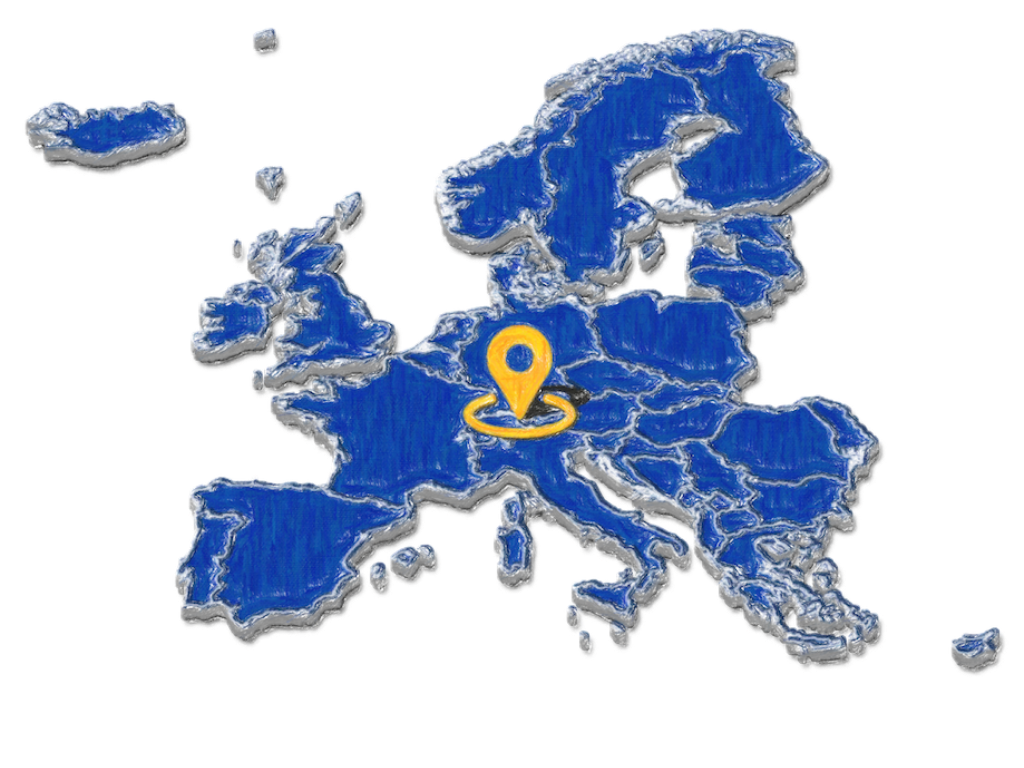
Kaiser Partner Wealth Advisors has specialised in the structuring of cross-border assets for decades. Its headquarters in Vaduz, Liechtenstein, is no coincidence, but rather a structural advantage.
Setting out the purpose, organisational structure and the desired arrangements for beneficiaries.
Decisions regarding founders’ rights, capital structure, the board of directors and any other governing bodies.
Drafting of the deed of incorporation, the articles of association and, where applicable, supplementary articles of association for the beneficiaries.
Registration with the Commercial Register, together with the necessary documents and proof of capital.
Management of the institution, compliance with regulatory requirements, and provision of tax and organisational support.