The Foundation
A flexible and stable tool for wealth preservation and succession planning
The foundation is a legally and financially independent trust fund established as a legal entity. The founder transfers assets to the foundation, which the Board of Trustees manages and utilises in accordance with the purpose specified by the founder and in line with the founder’s intentions as set out at the time of the foundation’s establishment. The assets contributed are, as a rule, separated from the founder’s personal assets.
The foundation can be used to support a wide variety of causes

Succession planning
Clear, long-term arrangements for asset and business succession (succession planning).

Asset protection
Protecting and preserving assets across generations (asset protection).

Caring for relatives
Providing for and supporting family members or other individuals.

Non-profit status
Pursuing charitable, cultural or social aims through the foundation.

Hold shareholdings
Centralised holding and management of corporate shareholdings through a stable structure.

International tax planning
Integration of the foundation into a cross-border, tax-optimised asset structure.
Answers to the most important questions about Liechtenstein foundations
Will the foundation be entered in the commercial register?
Foundations whose purpose is predominantly for private benefit do not have to be entered in the Commercial Register. They acquire legal personality as soon as the declaration of foundation takes effect; registration is optional. By contrast, foundations whose purpose is predominantly charitable only acquire legal personality upon entry in the Commercial Register.
How is the foundation set up?
A foundation is established by means of a declaration by one or more founders – either in a foundation deed signed by the founder (inter vivos foundation) or in a will or contract of inheritance (foundation by reason of death). To establish a foundation, assets must be dedicated to it amounting to at least the statutory minimum capital of CHF 30,000 (or, alternatively, EUR/USD 30,000), and the purpose of the foundation – including the designation of the beneficiaries – must be specified.
What objectives can the foundation pursue?
Es können Stiftungen mit privatnützigen oder gemeinnützigen Zwecken errichtet werden; beide lassen sich auch kombinieren. Klassisches Beispiel einer privatnützigen Stiftung ist die Familienstiftung, deren Vermögen überwiegend der Erziehung, Bildung, Ausstattung oder Unterstützung von Familienangehörigen dient. Daneben sind sogenannte Unternehmensträgerstiftungen möglich, die Erhalt und Förderung der von ihnen gehaltenen Unternehmen bezwecken.
What are the governing bodies of the foundation?
Der Stiftungsrat führt die Geschäfte und vertritt die Stiftung nach aussen; er besteht aus mindestens zwei natürlichen oder juristischen Personen. Bei überwiegend gemeinnützigen Stiftungen ist zwingend eine Revisionsstelle zu bestellen, privatnützige Stiftungen können sich freiwillig der Revision unterstellen. Zusätzlich kann ein Protektorat aus einer oder mehreren Vertrauenspersonen des Stifters errichtet werden, das den Stiftungsrat überwachen, beraten, Dokumente abändern oder über Verwaltung und Verwendung der Mittel bestimmen kann. Der Stifter kann zudem ein Kontrollorgan einrichten, das jährlich prüft, ob das Vermögen zweckgemäss verwaltet wird.
Who are the beneficiaries of the foundation, and what entitlements do they have?
A beneficiary is any natural or legal person who, at any time during the Foundation’s existence or upon its termination, receives or may receive an economic benefit from it; such beneficiaries are first designated by the founder at the time of the Foundation’s establishment. A distinction is made between beneficiaries who have a legal entitlement to a benefit specified or determinable in terms of its amount and timing, and discretionary beneficiaries, whose potential benefit lies within the discretion of the Foundation Board or the Protector.
What documents does the foundation hold, and what do they cover?
The deed of foundation (the articles of association) contains all the essential provisions regarding the foundation’s purpose and organisation. In addition, the founder may draw up a supplementary deed of foundation (the supplementary articles of association), which generally sets out the provisions regarding beneficiaries and does not necessarily have to form part of the deed of foundation. Internal regulations may be adopted to provide further details. In addition, the founder is free to draw up a ‘Letter of Wishes’ setting out their wishes to the Foundation Board; whilst this is non-binding, the founder’s wishes as set out therein must be taken into account when the Foundation Board makes decisions.
What assets can be transferred to the foundation?
In principle, anything that confers a monetary claim – such as receivables, securities, movable property or land – can be donated, as can equity interests. Once the foundation has been established, the founder or third parties may make further
contributions of assets to the foundation at any time.
What rights does the founder have?
The foundation will be established within the legal framework in accordance with the founder’s wishes. The founder may reserve the right to continue to exert influence even after the foundation has been established – for example, through the right to amend the foundation’s documents at a later date and/or to revoke the foundation.
Is the foundation subject to state supervision?
Der Aufsicht der Stiftungsaufsichtsbehörde (STIFA) unterstehen überwiegend gemeinnützige Stiftungen. Privatnützige Stiftungen können sich freiwillig der staatlichen Aufsicht unterstellen.
How long will the foundation exist – and when will it be wound up?
Foundations may be established for an indefinite or fixed term; furthermore, the founder may reserve the right to revoke the foundation. The foundation shall be terminated if:
- the term specified in the deed of foundation has expired or another ground for termination specified therein arises;
- the purpose of the foundation has been achieved or is no longer achievable;
- bankruptcy proceedings are commenced in respect of the foundation’s assets (or, in the absence of assets, are dismissed by the court);
- the founder revokes the foundation, provided they have reserved this right;
- the foundation is dissolved by a court order.
How is the foundation taxed?
Foundations are subject to an income tax of 12.5 per cent, subject to a minimum income tax of CHF 1,800 per annum. Foundations that do not engage in any economic activity and derive their income primarily from assets held may obtain the status of a private asset structure (PVS) and are then subject only to the minimum income tax of CHF 1,800 per annum. The contribution of assets to the foundation and distributions from it are tax-free in Liechtenstein, but may give rise to tax consequences abroad.
What are the reporting requirements?
Since 2017, Liechtenstein has been exchanging tax data with numerous countries under the Automatic Exchange of Information (AEOI) scheme. If the founder has reserved the right to exercise influence, the foundation’s total assets are, in principle, reported to the founder’s country of residence; in the absence of such rights, a report is made without specifying the assets. In the case of beneficiaries, the assets attributable to them and any distributions are reported to their respective countries of residence; discretionary beneficiaries are reported only for those years in which they have actually received distributions. If there are influential protectors, the total assets are also reported to their countries of residence – if they have no influence, this report is not made.
What you stand to gain, specifically

A clear separation from the founder’s private assets through a legally independent structure.
Private, charitable or a combination of both – including family and corporate foundations.
12.5% income tax, or a minimum income tax of just CHF 1,800 per annum, as a private asset structure.
Rights to make changes and to withdraw, as well as a non-binding but effective Letter of Wishes.
The Foundation Board, an optional protectorate and a supervisory body ensure oversight and trust.
Transparent handling of reporting obligations under the Automatic Exchange of Information.
Why Kaiser Partner
Liechtenstein has one of the oldest and most stable sets of company laws in Europe. The Law on Persons and Companies (PGR) of 1926 forms the basis for structures that offer long-term reliability – whether a foundation, trust, public limited company or Anstalt – regardless of political developments in other countries.
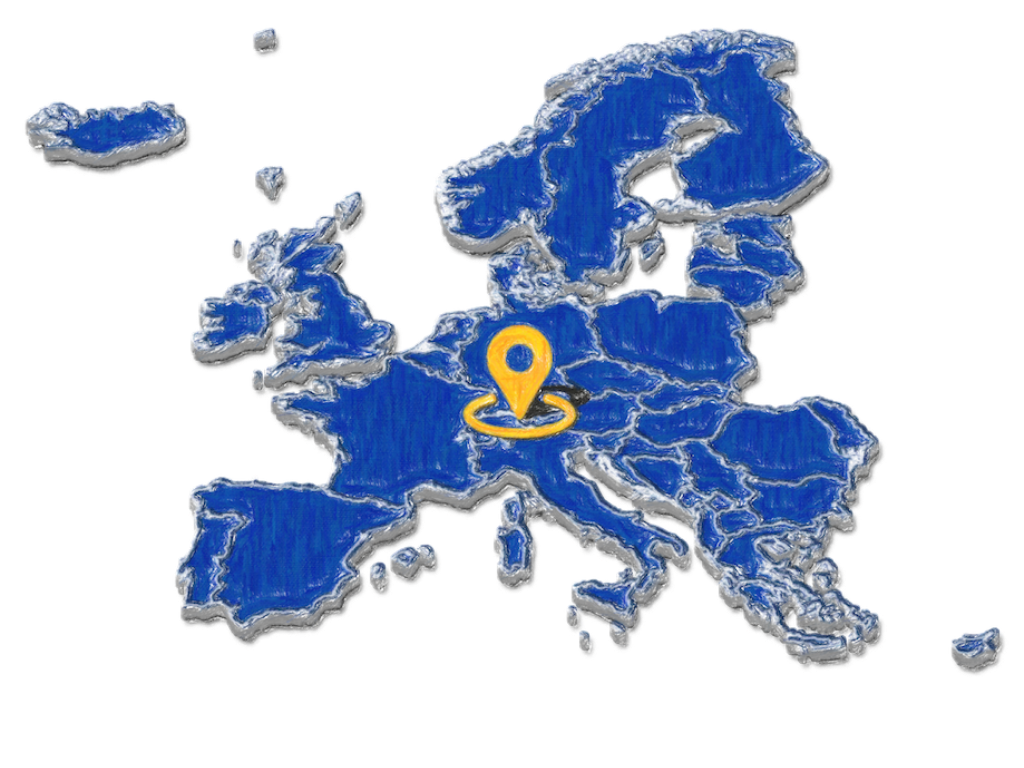
Kaiser Partner Wealth Advisors has specialised in the structuring of cross-border assets for decades. Its headquarters in Vaduz, Liechtenstein, is no coincidence, but rather a structural advantage.
Clarification of the foundation’s purpose, beneficiaries and the level of influence the founder wishes to have.
Determination of capital, governing bodies and governance – including the protectorate and supervisory body.
Drafting of the foundation deed, by-laws, regulations and, optionally, a letter of wishes.
Allocation of capital and definition of the foundation’s purpose; entry in the Commercial Register, where applicable.
Management of assets and compliance with tax and reporting obligations.